Evidence Action: 2025 in Review
Some highlights from what we achieved together this year
In 2025, development funding contracted globally. Yet supporters like you made it possible for Evidence Action to not only maintain but grow their impact: reaching millions of people living in poverty across Africa and Asia with proven, cost-effective programs. These updates capture a year defined by scale, learning, and steadfast commitment to doing the most good with every dollar.


More than 895 million children globally are at-risk for parasitic worm infections, which cause anemia, malnutrition, and impaired cognitive development that lead to missed school days and reduced lifetime earnings. Despite costing only about $0.50 USD per child per year to treat, many countries lack the technical capacity and resources to deliver high-quality and cost-effective mass treatment programs at scale.
In 2025, Evidence Action’s Deworm the World targeted 177 million children across five countries while launching a new partnership in Tanzania.
$169
Estimated return for every $1 invested in deworming
<$0.50
Average cost per treatment (USD)
2B+
Deworming treatments delivered globally since 2014
🇳🇬 Nigeria: Evidence-Driven Impact Reshaping State Deworming Strategy
After seven years of partnership in Cross River State, Evidence Action’s technical assistance helped reduce prevalence of soil-transmitted helminths by 49% and schistosomiasis (a waterborne parasitic disease) by 75%. The recent results – collected in partnership with the Cross River state government – informed the state’s decision to reduce treatment frequency in areas where worm prevalence is now low. This approach ensures that resources are allocated more effectively and targeted to communities with the greatest need.
🇮🇳 India: Strategic Government Transitions
After a decade of sustained treatment supported by Evidence Action, several Indian states have eliminated parasitic worms as a public health problem. In 2025, Evidence Action scaled back or concluded their support in these states as they demonstrated the capacity to maintain programs independently.
In August 2025, National Deworming Day — one of the world's largest single-day public health campaigns — delivered treatment to 146.8 million children across the three states where Evidence Action continues to provide full technical support, maintaining the massive scale they've achieved over the past decade. Evidence Action anticipates that all Indian state programs will operate independently by March 2027, proving that technical assistance can be time-bound and that government systems can fully own proven interventions.
🇰🇪 Kenya: Positioning for Complete Government Handover
Since Evidence Action began supporting Kenya's national deworming program in 2012, worm infections have dropped over 80%, meaning millions of children now avoid the anemia, malnutrition, and school absenteeism these infections cause.
This progress positions Kenya to eliminate worms as a public health problem by 2027. Thanks to strong government capacity and commitment, Evidence Action is now exploring pathways to conclude their technical assistance and provide the government with the tools and resources they need to keep worm infections under control.
🇵🇰 Pakistan: Prevalence Survey Guiding Path to Elimination
In October 2025, Evidence Action launched the National Impact Survey for Pakistan’s deworming program, which they’ve supported since 2019 and now reaches about 14 million children annually. Using microscopic analysis of stool samples to measure prevalence and intensity of worms, the survey will measure the impact of the deworming rounds to inform program strategy going forwards.
At the same time, Evidence Action has continued to work with the provincial governments to mobilize domestic resources towards the program, strengthening its long-term sustainability. As a result of these efforts, the government of Khyber Pakhtunkhwa recently made a three-year allocation to support 20% of the annual implementation budget. This represents a significant milestone and sets an important precedent for other provinces to follow.
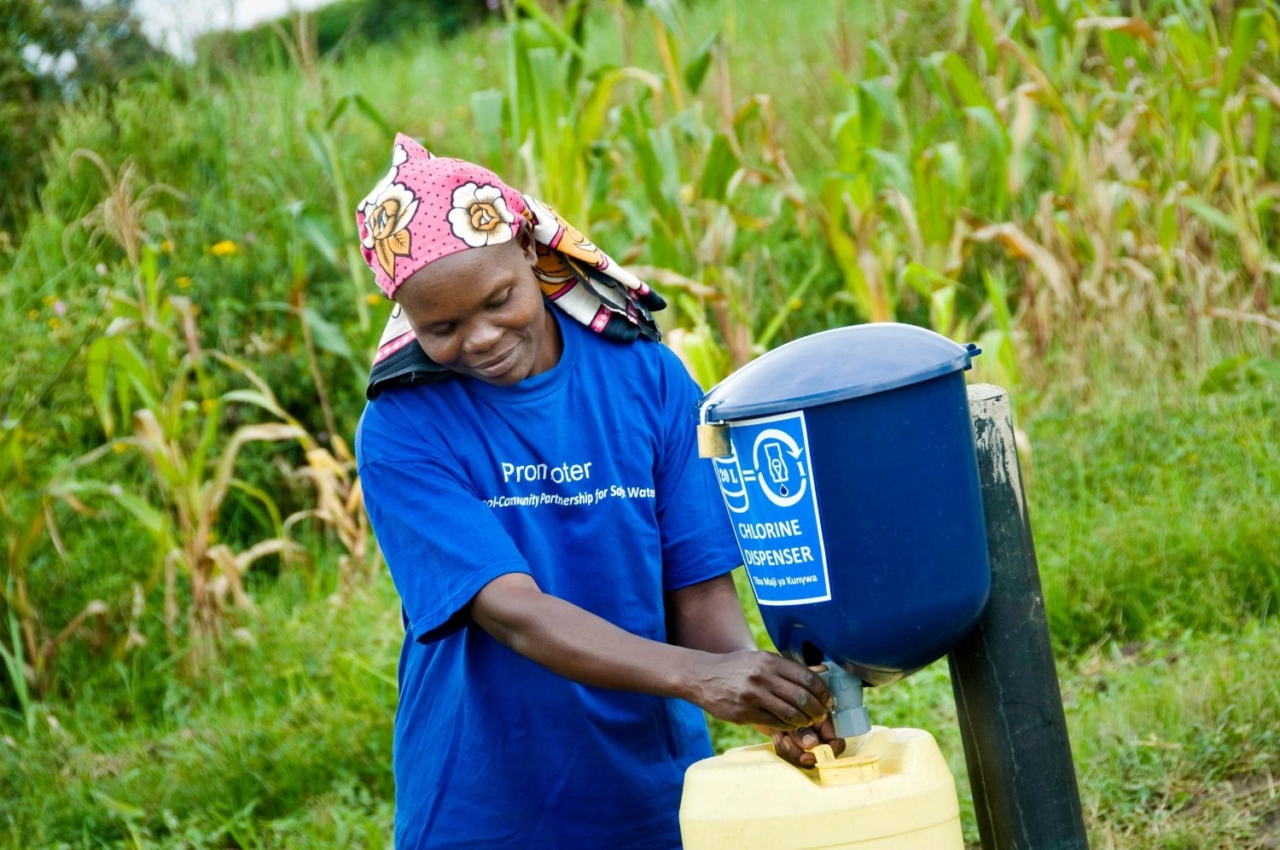
Unsafe water causes over 1 million preventable deaths annually, with diarrheal disease ranking among the leading causes of death for children under 5. Point-of-use water treatment through chlorination can reduce under-five mortality by ~20%, yet coverage remains critically low in most low-resource settings.
In 2025, Evidence Action continued reaching millions with safe water across Africa and Asia, helped shape how India defines and delivers water treatment, and made a difficult decision to reduce their dispensers footprint in Kenya while following new evidence.
2 models
Evidence Action delivers chlorine via two models – dispensers and in-line chlorination.
~20%
Reduction in all-cause under-five deaths through water treatment
🇮🇳 India: From Pilots to National Policy
The Indian government has made a massive investment in piped water infrastructure through its Jal Jeevan Mission — expanding rural household tap connections from 32.3 million (17%) in 2019 to 157.2 million (81%) by October 2025, bringing water directly into homes that once relied on distant or unreliable sources. But infrastructure alone doesn't guarantee safe water. In 2025, Evidence Action’s partnership helped catalyze a critical shift in focus — from building pipes to ensuring the water flowing through them is safe to drink.
As a technical partner at both national and state levels, Evidence Action helped install in-line chlorination devices while building government capacity to adopt and sustain the program. Their work is generating the data and operational frameworks India needs to make safe water a measurable and fundable public health goal. If chlorination becomes a nationwide priority, the systems they're testing could deliver safe drinking water to tens of millions of people.
🌍 Africa: Strategic Partnerships Multiply Impact
With more than 2 billion people worldwide lacking access to safe drinking water, solving this challenge requires collaborative approaches that extend beyond any single organization. In 2025, Evidence Action deepened partnerships with water infrastructure providers in Malawi and Uganda as an alternate pathway to efficiently bring in-line chlorination to scale, and committed to sharing their knowledge with other organizations expanding water chlorination programs.
By working directly with organizations like Innovation: Africa and GOAL Uganda that build piped water systems in rural areas, they can layer chlorination onto existing infrastructure — ensuring communities receive safe water from the start rather than building systems from scratch. Through these partnerships in Uganda and Malawi, Evidence Action brought safe water to tens of thousands more people in 2025.
Additionally, as GiveWell explores funding to other organizations to pilot water chlorination, Evidence Action is sharing their operational knowledge and implementation evidence across the water treatment space. This collaborative approach means more people around the world will gain access to safe drinking water, ultimately reducing illness and deaths caused by contaminated water.
🇰🇪 Kenya: Acting on Evidence After a Decade of Impact
When new evidence showed Evidence Action’s dispensers program in Kenya was less cost-effective than they believed, they announced a difficult decision to reduce the scale of their programming by roughly half. Through this 18-month transition period, they’re working closely with local partners and communities to test government handover models in Busia and Siaya counties and engage communities on alternative safe water practices.
Independent monitoring revealed the program was reaching approximately 40% fewer people using treated water than data suggested. Combined with Kenya's remarkable development over the past 12 years — GDP nearly doubled, child mortality declined over 25% — the full program no longer met Evidence Action’s internal cost-effectiveness threshold, though it remained highly effective by standard measures.
Even as evidence required them to change course, Evidence Action is proud of what their dispensers program in Kenya has achieved: 19,000 chlorine dispensers installed and safe water access extended to 2 million people each year since 2015. They estimate this intervention has prevented over 1 million cases of diarrheal disease and saved over 3,700 lives. These tangible impacts demonstrate why safe water remains a priority, even as they refocus their geographical footprint to maximize effectiveness.
Looking Ahead to 2026
The progress shared in this report is a reflection of your continued trust in Evidence Action’s evidence-backed approach. You make it possible for them to tackle some of global health's most neglected yet solvable problems: the safe water and parasite treatments that break cycles of illness and poverty.
In 2026, Evidence Action is positioned to launch more programs at scale than in any year yet, continue reaching over 200 million people annually with proven interventions, and build a global coalition to eliminate the majority of the world's congenital syphilis burden. They’re also experimenting with AI to learn whether it can meaningfully increase our impact.
No matter how they grow, experiment, or learn, one thing remains constant: their commitment to following the evidence to the solutions that can transform the most lives.
Thank you for making this work possible.