Reaching Children in Madagascar
Helen Keller Intl expands their vitamin A programme
Working to improve healthcare and nutrition requires a commitment to understanding the inequities within health and food systems – and to finding partners who can implement cost-effective solutions that improve outcomes on a large scale and for the long term. Helen Keller works hard to establish trust with both national ministries of health and local communities, as well as to build fruitful relationships with on-the-ground partners. Indeed, our roots run deep in many of the countries where we work.
Consequently, when they consider expanding our work to a country that is new to them, the decision is never taken lightly. They make sure they thoroughly explore the needs in the communities most impacted by inequities, and they engage in rigorous assessments of whether our particular expertise can meet those needs.
The Case for Taking Action
Situated off the southeastern coast of Africa, Madagascar is the world’s fourth-largest island. Despite having an abundance of natural resources, it lacks the industries needed to process raw materials locally, and the resulting reliance on exports generates only limited revenue. Political instability over several decades has further hindered economic development.
Yet Madagascar is home to 28 million people, more than half of whom live in rural areas and rely on subsistence farming for their food and livelihoods. These families are highly vulnerable to extreme weather events like droughts and cyclones. And limited access to modern tools, agricultural techniques, and viable markets contributes to persistent poverty among Madagascar’s people.
Fewer than a quarter of Malagasy children under the age of two eat a minimum acceptable diet, and 40 percent under age five suffer from stunting (small size for their age). Such widespread undernutrition, combined with poor access to an already weak health infrastructure, has led to tragically high rates of child mortality.
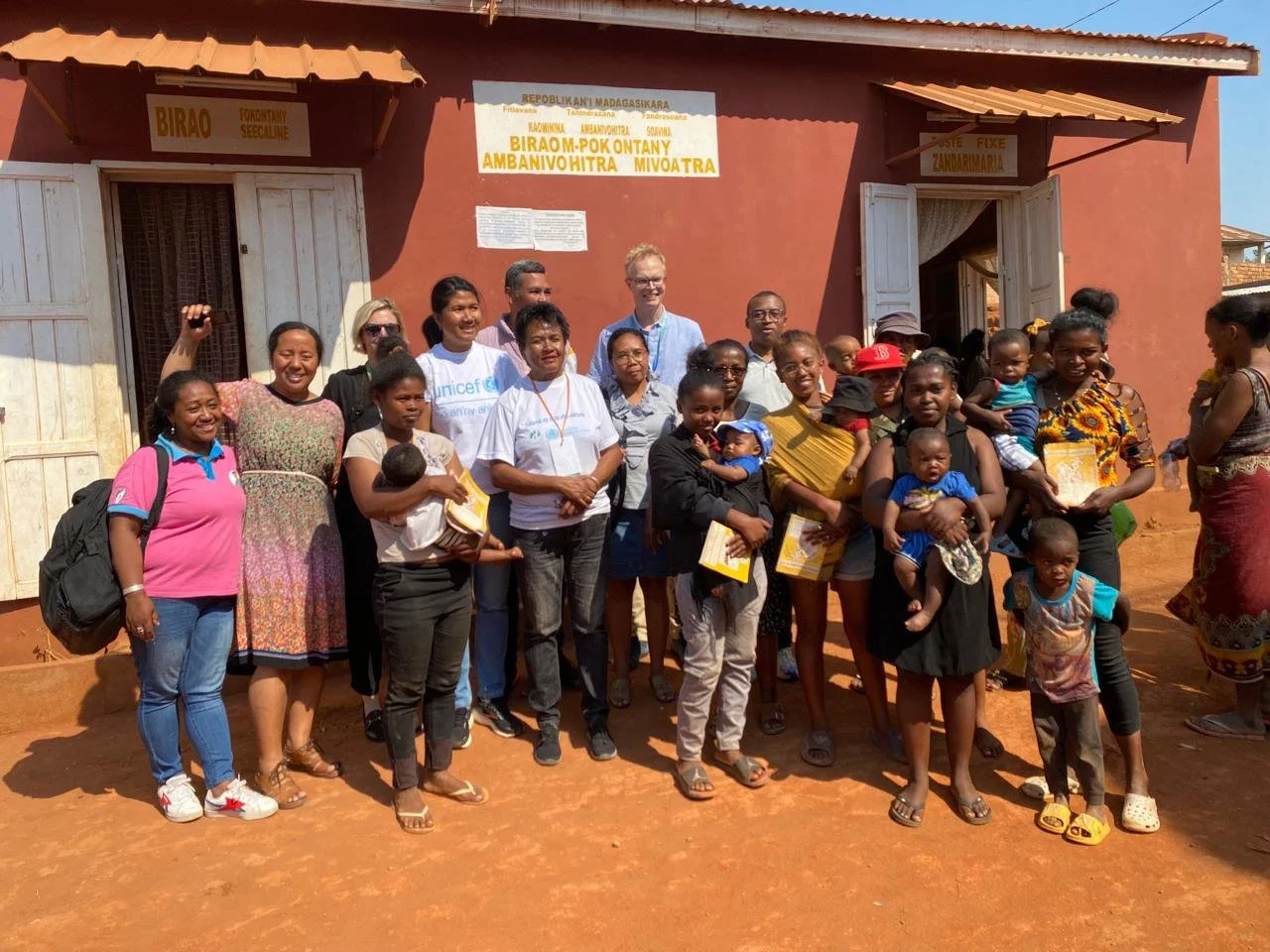
Staff from Helen Keller’s Madagascar office and community members.
Helen Keller’s vitamin A supplementation program is widely recognized as a lifesaving intervention for children whose diets are severely lacking in this key nutrient. It was first developed to expand Helen Keller’s legacy through addressing a form of preventable blindness. But the team soon discovered that, in addition to preventing night blindness in malnourished children, vitamin A improved immunity against common illnesses that were often deadly. Armed with evidence from years of protecting children’s lives this way, they knew that providing the supplement to vitamin A-deficient children in Madagascar would have powerful benefits for their nutrition and overall health. So, in partnership with GiveWell – the donor advisory that provides generous funding for our vitamin A programs – Helen Keller Intl made the decision to open a new country office in Madagascar.
Though vitamin A supplementation had been included in polio vaccination campaigns in Madagascar for about 12 years, that program was discontinued in 2019. So, they worked first with officials in the Ministry of Health and partners like UNICEF to develop education and training opportunities for new campaigns. Next, they managed the operational logistics of opening a new country office – no small feat – from registering as a business with the government to securing office space and building a talented team. By the fall of 2023, we were up and running.
Enlisting Community Health Heroes
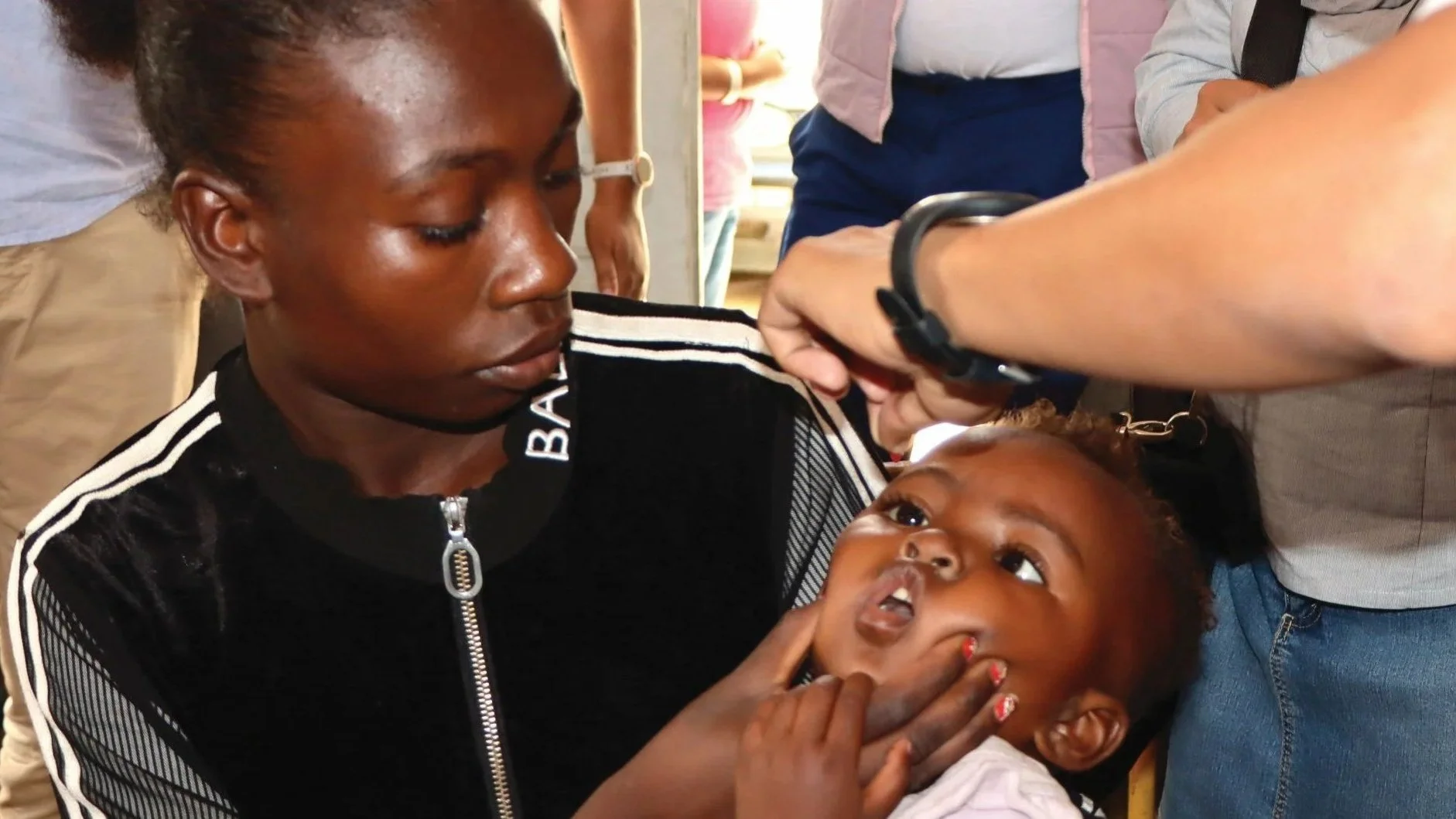
In July of 2024, with support from health facilities and the government, Helen Keller Intl trained 22,500 community health workers across four regions to add vitamin A mobilization, delivery, and reporting to existing child wellness services. It would not have been possible to reach so many children without these dedicated workers. Mostly volunteers who receive a daily stipend of just $2.30, they travel door-to-door to administer the high-potency vitamin A capsules to children between the ages of six months and five years.
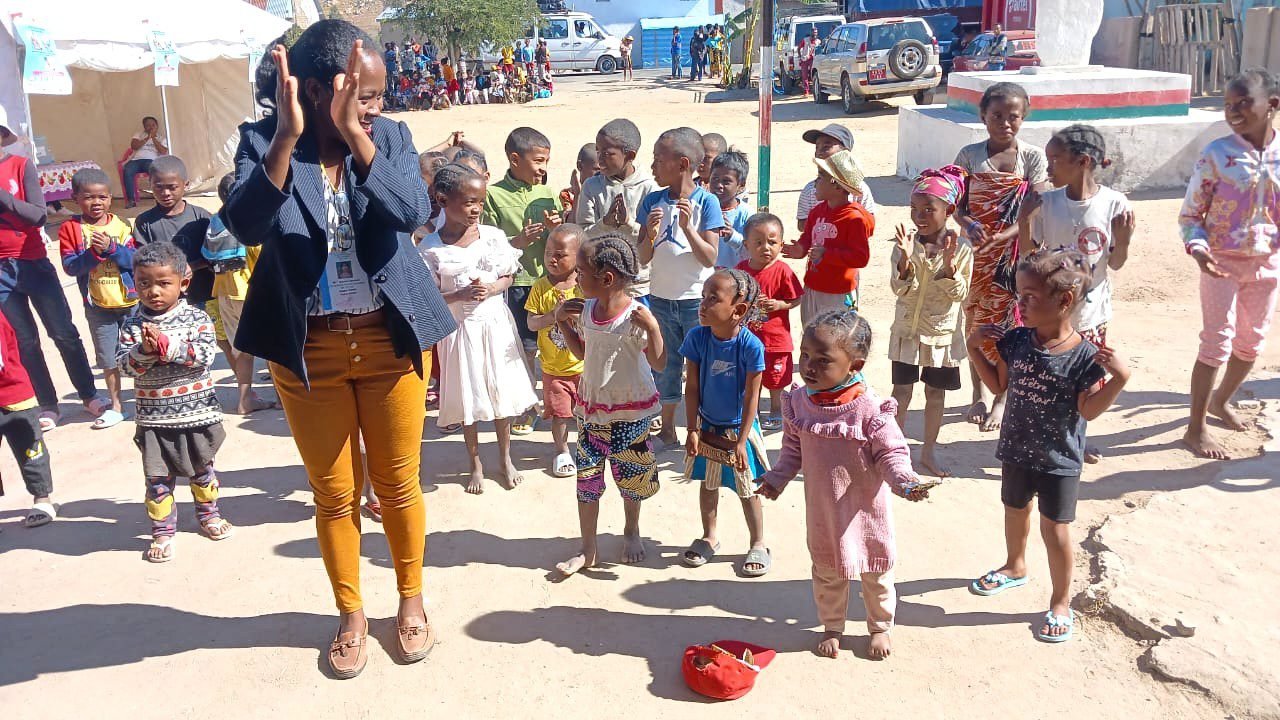
Malagasy children enjoy opening day festivities for the vitamin A campaign.
Over the course of four days, each of these heroes covered a distance of a kilometer or two within densely populated urban centers or as much as 20 kilometers in rural areas. They worked diligently to maximize coverage, recording visits as they went and even doubling back at night if a family wasn’t home during the day. In all, they were able to reach 88% of the children in the targeted age group.
Looking Ahead
Vitamin A supplementation is only Helen Keller Intl’s first effort toward helping Malagasy families improve their health. As they expand their roots in Madagascar, they are exploring how they can give families more opportunities to champion their own nutrition. This includes deploying support from the German government to assist manufacturers in fortifying staple pantry ingredients, for example, cooking oil, palm oil, and bouillon cubes. Making these fortified foods widely available increases the number of options families have for boosting their intake of essential micronutrients in ways that they can afford.
With generous support from donors, Helen Keller Intl’s first supplementation campaign in Madagascar provided more than 2.9 million children with their first dose of vitamin A, and they expect to double their reach in the coming year.